Context behind the interface
Inference, machine records, approved drawings, telemetry, tool execution, and operational history.
03 · MACHINES
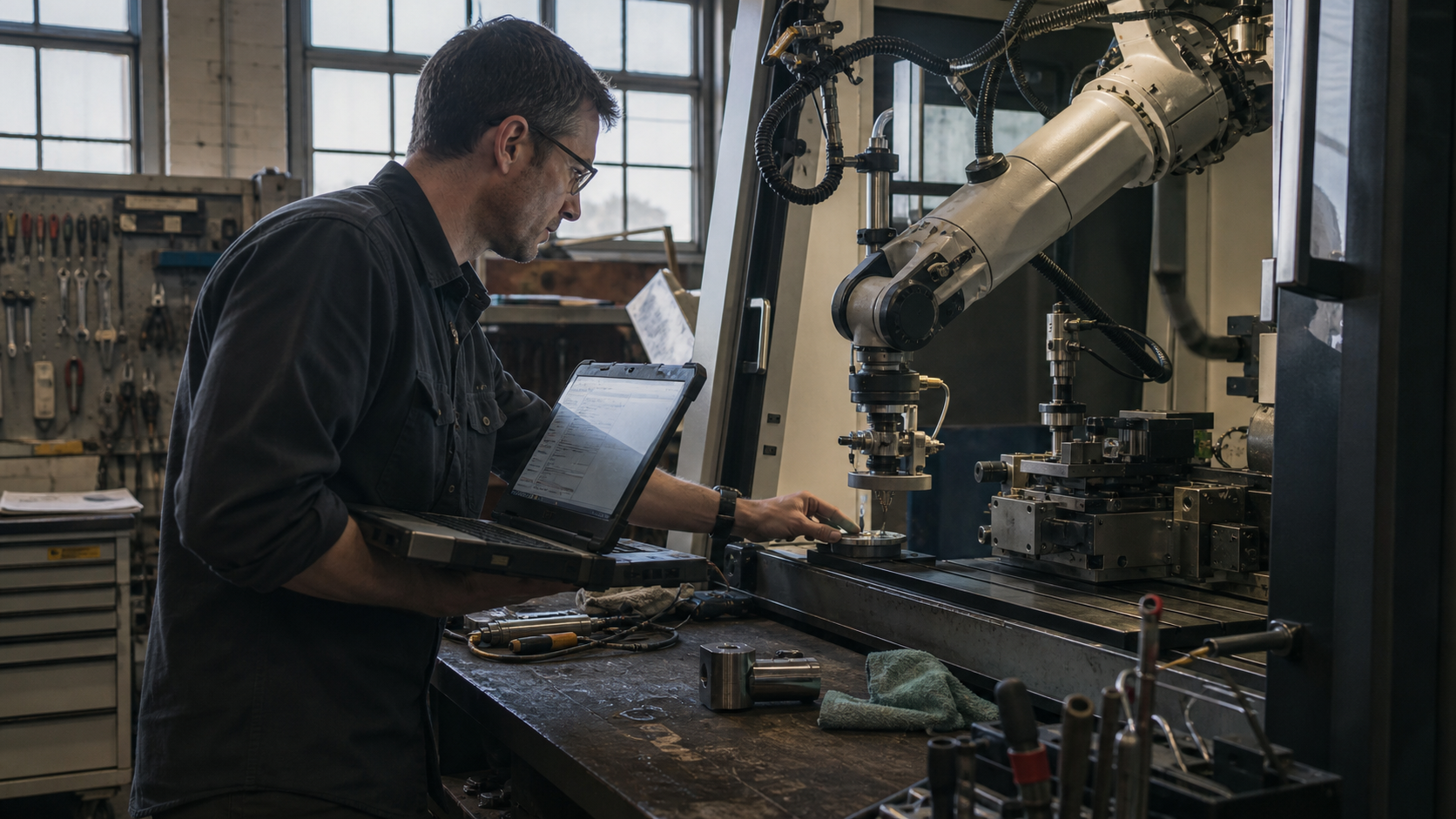
Start with the person, their task, and the moment they need help. These planned application areas depend on validated integrations and clear human control.
Inference, machine records, approved drawings, telemetry, tool execution, and operational history.
Equipment interfaces and facility systems within approved network zones. Control capabilities depend on the machine and its operating procedures.
Operators set limits and release permitted actions. Machine safety, emergency stops, and real-time control remain with the appropriate equipment systems.
ILLUSTRATIVE OUTCOME
INTERACTIVE SIMULATION
Move carrier 02 from Station 2 to Station 3, then stop.
Station 20%Station 3
The agent has prepared the operation. A human must authorize its physical effect.
Inspection route prepared inside Cell M-14.
Interlocks, clearance, and payload verified.
BUILD THIS ON VISCA
Build the interaction on Visca with shared identity, memory, tools, and permissions. Use Mellow as the ready-made workspace, free forever for personal use, or create your own interface. Choose local or connected services to fit the application.
Explore Mellow Illustrative product scenarios. Integration availability depends on your deployment.THE AGENT CARRIES
ITS HUMAN DECIDES
ONE CONTINUING ASSIGNMENT
Compare the task with machine state, maintenance, tools, and constraints.
01Approve the physical operation and its intervention boundary.
02Coordinate execution while monitoring the signals that matter.
03Review the result, exception history, and next maintenance action.
04A workshop wants to make a small fixture from an approved drawing. Preparation crosses design files, stock availability, equipment readiness, job notes, and an operator’s review. This scenario shows how an agent workplace could keep those pieces together while any physical operation stays within the equipment’s established operating procedures.
Illustrative product scenario. These are proposed experience requirements, not a customer case study or a statement of current integration availability.
Provide the drawing revision, intended material, acceptance criteria, permitted equipment, and the person responsible for releasing the job. The agent could organize the job packet, compare requested materials with available records, and identify questions for the operator. It should make the planned operation and its assumptions inspectable before requesting authority to affect a machine.
A completed assignment includes the approved job packet, the operation record available from the equipment, any operator interventions, and the result of the agreed inspection. If the fixture fails an acceptance check, the outcome is a documented exception with a proposed next step. Producing a part is not the same as producing an accepted part, and a completed command is not evidence of either.
A screen beside the machine could focus on the current job, confirmed state, and the next operator decision. Away from the workshop, a status update can say that the job needs attention and why. The experience should distinguish viewing a job remotely from having authority to operate equipment; arriving near a machine should not automatically expand that authority either.
If acknowledgement of a command is missing, the agent should show that the result is unknown rather than assume the command failed. The operator needs to establish the actual machine and workpiece state before considering another action. Retain the original request, last confirmed feedback, and recovery decision so a repeated command cannot be mistaken for the first attempt.
Begin with job preparation and review, then evaluate any proposed equipment connection separately. Visca’s product scenario does not replace machine controls, guarding, operating procedures, or the operator’s responsibilities. The relevant question is whether the particular integration can make authority, actual state, intervention, and completion clear enough for the intended job, not whether an agent can issue a command.
Use these questions to evaluate one bounded piece of work in your own setting.
WHY CONTINUITY MATTERS
NEXT FIELD · PHYSICAL EMBODIMENT
Give physical agents a human interface.